Payment Without Internet Access: an opportunity for rural African MFIs in the digital age
The digitalization of financial services is growing very quickly in Africa. Mobile money, financial apps, instant payments, and fintech solutions are gradually transforming people's habits and the offerings of financial institutions. In sub-Saharan Africa, innovations in digital payments are now a significant driver of financial inclusion, particularly for populations traditionally excluded from banking services. However, this transformation remains highly dependent on the availability of reliable internet access and infrastructure.
Internet access is progressing across the continent, but significant disparities remain between urban and rural areas. These disparities are compounded by the cost of devices and data, difficulties accessing electricity, and a lack of digital skills. For many rural communities, therefore, having network coverage does not necessarily mean being able to regularly use digital services.
For rural populations, the absence or instability of the network can disrupt a transaction at the very moment it needs to be carried out: loan repayment, payment to a supplier, money transfer, or payment for a purchase. This dependence on connectivity can also limit the ability of microfinance institutions (MFIs) to digitize their services for the most remote clients. Under these conditions, cash remains important, and the benefits of digitization are likely to accrue more to populations that are already connected. The challenge, therefore, is now to design a digital finance system capable of functioning with or without internet.
A new generation of solutions is gradually addressing this issue: offline payment. Among the emerging innovations in West Africa is REMA, an Ivorian initiative developing a payment infrastructure designed to function even when the network is unavailable. REMA stems from a simple observation: in rural areas and areas with poor coverage, transactions can fail as soon as the connection drops. Merchants, agents, and customers then naturally revert to cash. The project aims precisely to address this situation by enabling digital payments without relying on an internet or mobile network connection.
Such an approach could reduce certain operational constraints, facilitate local transactions, and strengthen the continuity of financial services. Above all, it encourages African MFIs to move beyond the "always-on digital" model and explore "offline" solutions designed from the ground up for the realities of rural areas.
Innovation in payments must therefore not only aim to connect more people, but also to guarantee access to financial services when connectivity is unavailable. Offline payment solutions, particularly those based on device-to-device communication, are one of the avenues being explored to address this issue. For rural microfinance institutions (MFIs), the challenge will be to evaluate these technologies, taking into account security, cost, customer experience, and their integration with existing systems. The next border of digital finance in Africa could thus be enabling financial services to continue flowing even when the network fails.
A Look Back at the Training Session on: Management in Crisis Situations.
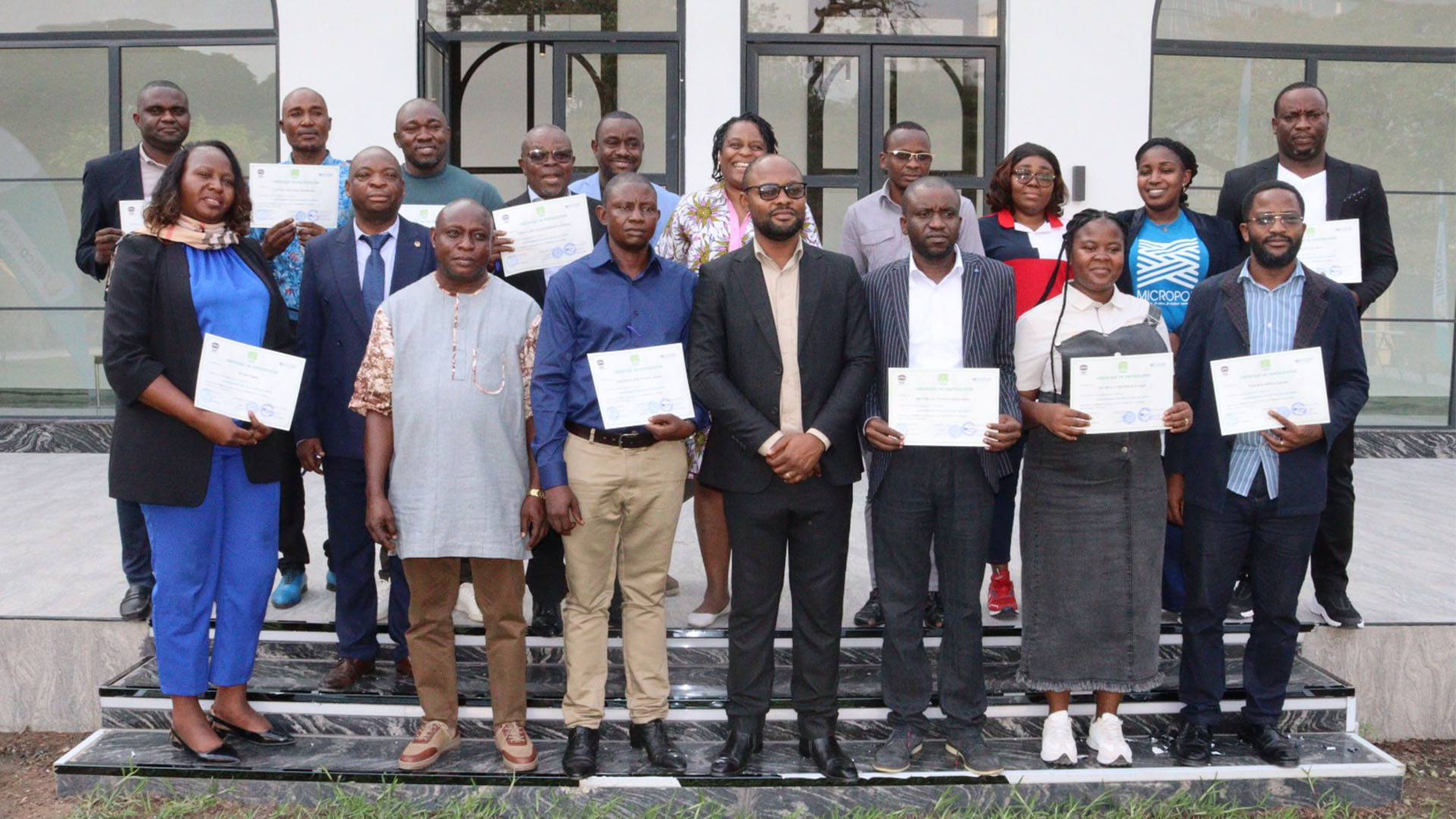
From June 17 to 19, 2026, in Kinshasa, MAIN, in collaboration with the National Association of Microfinance Institutions (ANIMF) and the Professional Association of Savings and Credit Cooperatives (APROCEC) of the Democratic Republic of Congo, organized a training session on "Management in Crisis Situations". This session aimed to strengthen the capacity of leaders, managers, and heads of microfinance institutions to anticipate, manage, and effectively overcome critical situations, while ensuring business continuity and team cohesion.
The discussions focused on several key themes: understanding and analyzing crisis situations, anticipation and preparation, leadership and decision-making in uncertain contexts, team coordination, crisis communication, conflict management, and business continuity and operational protection. Particular attention was paid to practical tools enabling institutions to better prepare for and respond effectively to different types of crises.
The training was particularly interactive, with case studies, practical exercises, and role-playing scenarios allowing participants to apply the concepts to the realities their institutions may face. The discussions also fostered the sharing of experiences among professionals regarding the challenges encountered in team management, decision-making, and maintaining services during periods of instability.
Through this initiative, MAIN reaffirms its commitment to strengthening the resilience of African microfinance institutions and supporting their leaders as they navigate through increasingly complex environments. Building management skills in crisis situations is, in fact, a key factor in enabling MFIs to protect their teams, maintain their operations, and continue to serve their clients, even in difficult situations.
travers cette initiative, le MAIN réaffirme son engagement à renforcer la résilience des institutions de microfinance africaines et à accompagner leurs dirigeants face aux environnements de plus en plus complexes. Le développement des compétences en management de crise constitue en effet un levier essentiel pour permettre aux IMF de protéger leurs équipes, préserver leurs opérations et continuer à servir leurs clients, même dans des situations difficiles.
Growing Risks Associated with Natural Disasters in Africa: Why Must MFIs Take Action?
Floods, droughts, heat waves, and coastal erosion: ecological crises are increasingly exposing African populations and economic activities. For microfinance institutions (MFIs), these evolutions also represent a growing risk to their clients, portfolios, and operations. Anticipating these risks is therefore becoming a matter of financial resilience and sustainability.
Africa is particularly vulnerable to the effects of climate change, despite contributing relatively little to global greenhouse gas emissions. Rural populations, farmers, women, and small businesses, who often have limited capacity to absorb shocks, are among the most exposed.
Recent events in West Africa illustrate this reality. In June 2026, heavy rains caused widespread flooding in several countries in the Gulf of Guinea, including Côte d'Ivoire, Ghana, Togo, and Nigeria. In some areas, more than 140 mm of rain fell in less than 24 hours.[1] Exceeding the natural and urban water drainage capacities.
These events can lead to the destruction of crops, homes, businesses, and equipment, as well as disrupt economic activity and supply chains. Across the continent, the World Meteorological Organization indicates that extreme weather and climate events have affected at least 13 million people by 2025, with more than 3,000 deaths reported.[2] Floods accounted for more than half of the reported events.
For microfinance institutions (MFIs), ecological crises are not merely an environmental or social issue. It can also become a financial and operational risk. The destruction of a crop can reduce a farmer's ability to repay a loan. The loss of inventory or equipment can weaken a small business. A flood can also affect an institution's infrastructure, disrupt staff travel, and limit clients' access to financial services. Ultimately, a high concentration of the portfolio in highly exposed activities or areas can increase credit risk and weaken portfolio quality.
To address these risks, microfinance institutions (MFIs) can gradually integrate environmental and climate considerations into their decision-making. This includes identifying the most exposed sectors and areas, incorporating certain climate risks into loan application analyses, and better monitoring the performance of the portfolios concerned.
This approach can also be accompanied by the development of financial products that promote resilience: green loans for solar energy or efficient irrigation, financing for climate-adapted agricultural activities, precautionary savings mechanisms, and climate insurance solutions. These instruments can help reduce household vulnerability while supporting their ability to maintain their activities even during times of crisis. MFIs can also make better use of climate information and early warning systems.
Natural disasters should no longer be considered as external risks to the activities of microfinance institutions (MFIs). It can directly affect their clients, the quality of their portfolios, and the continuity of their operations.
It is therefore essential for institutions to measure their exposure, identify the vulnerabilities in their portfolios, progressively integrate climate risks into their risk management, and develop financial solutions that promote resilience. By acting now, microfinance institutions (MFIs) can both better protect their operations and contribute to protect the populations they serve.
Making inclusive finance a lever for climate resilience means sustainably strengthening local economies in the face of future ecological crises.
Upcoming Events
October 12-14, 2026 Leadership and Management Training: Building Resilient, Sustainable and High-Impact Institutions
October 5 and 12, 2026 Webinar on EST (Ecological and Social Transition)
October 21, 2026 EsBanque Customer Service Representative Diploma Exam