

“Two participants share their impressions on the workshop ‘Growth Strategies for Microfinance Institutions’”
In a context where the financial sector is evolving rapidly, Microfinance Institutions (MFIs) face increased competition, digital transformation, stricter regulatory requirements, and constantly changing customer expectations. Faced with this increasingly complex and non-linear growth, it was essential for leaders to strengthen their strategic capabilities to rethink their models, integrate innovation, and guide their organizations through transformation. To support MFIs in addressing these challenges, MAIN organized a training program dedicated to growth strategies for microfinance institutions, held from November 12 to 14, 2025, in Kigali, Rwanda. During the three days, participants from several East African countries exchanged ideas on the key levers enabling MFIs to develop in a planned, sustainable, and structured manner.
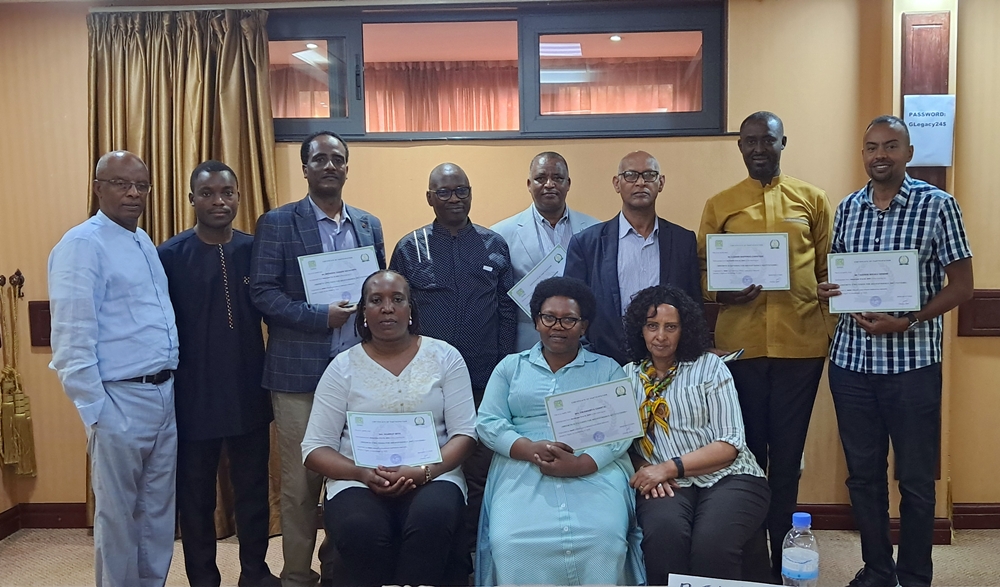
At the end of the workshop, two participants shared their impressions of both the organization of the training and its execution.
Testimonials received from participants on growth strategies training:
“A participatory and very enriching training program” – Testimony of Christian Kamari, CEO of Sager Ganza Microfinance (Rwanda)
“I must say that my overall impression during these three days was very positive. As a Managing Director, growth is central to my mandate, and the training fully met my expectations. I particularly appreciated the way it was organized: a trainer who has a perfect command of the subject matter, practical exercises, rich discussions, and the diversity of experiences shared by colleagues from Ethiopia, Uganda, and Rwanda.”
What struck me most was the participatory nature of the methodology used. We weren’t just listening; we were engaged in reflection, analysis and discussions on the various possible growth strategies.

I leave this training with a strengthened conviction: for an institution to grow, it must plan its growth. This begins at the board level and then extends to the management level. I also learned that we must not be swayed by competitive pressure: each institution must grow at its own pace, when the conditions are right.
Today, I feel better equipped by this training and I am committed to sharing what I have learned with my colleagues and my board of directors. I hope this will allow us to take Sager Ganza Microfinance to a new stage of development.
“A very comprehensive training program that provides a structured vision of growth” – Testimonial from Beth Akareut, Head of Credit, Hofokam Microfinance (Uganda)
“My experience with this training was very good, and above all very enriching. We greatly appreciated the relevance of the content, presented in a clear and progressive manner.
Of everything that was shared, the four key dimensions of a growth strategy impressed me the most.
First, planning: knowing where you are, determining where you want to go, and identifying the path to get there.

Next, the organization: putting in place the necessary resources, including human, financial and material resources that will enable the strategy to be executed.
The third dimension is leadership: having people capable of clearly articulating the vision, mobilizing teams, and defining roles and responsibilities. Finally, the control dimension: setting objectives, measuring progress, monitoring, and sharing feedback to ensure sustainable growth.
These elements provide a solid foundation for any institution that wishes to grow in a structured way.
I can confirm that the training met my expectations 100%. Growth is part of our daily reality and what our stakeholders expect. Having a better understanding of the mechanisms that underpin it is essential to guide us along this path.”
A training program that paves the way for controlled growth
COP30, held in Belém, Brazil, marked a major turning point in global climate governance with the adoption of the “Belém Package,” a set of 29 decisions designed to accelerate the implementation of the Paris Agreement. This package focuses on adaptation, climate justice, health, forest protection, and financial transparency. Among the most significant advances, the international community committed to tripling adaptation funding by 2035, in response to escalating climate risks that particularly affect the most vulnerable economies.
COP30 also established the Baku Adaptation Roadmap to harmonize global efforts by 2028 and adopted 59 indicators to measure progress in key sectors such as water, health, food, infrastructure, and finance. One of the key decisions is the creation of a “just transition” mechanism, designed to support communities most exposed to the economic transformations linked to decarbonization, while ensuring equity, human rights, and inclusion. The Gender Action Plan adopted in Belém reinforces this momentum by integrating gender-responsive budgeting, promoting women’s participation, and taking into account the specific needs of indigenous, rural, and Afro-descendant women in all climate policies.
The conference also launched several implementation initiatives such as the “Global Implementation Accelerator” and the FINI program[1] designed to structure $1 trillion in adaptation projects over the next three years, with at least 20% private funding. Two major sectoral advances complement these measures: the “Belém Health Action Plan,” supported by more than 30 countries and 50 organizations with initial funding of $300 million, and the creation of the “Tropical Forests Forever Facility,” the first international mechanism to reward the protection of tropical forests, with more than $6.7 billion committed at its launch.
During Africa Day at COP30, African delegations reiterated their priorities and vulnerabilities. They stressed the urgency of fairer, more innovative, and less debt-generating climate finance, pointing out that nearly 60% of climate funds received by the continent still result in additional debt. Africa is advocating for an overhaul of the international financial architecture to make climate finance more accessible and commensurate with actual needs. It is also calling for greater mobilization of domestic resources to support green, resilient, and job-creating industrialization. The African Development Bank (AfDB) emphasized the need for climate finance tailored to countries weakened by conflict, where adaptation is also a matter of stability.
In this evolving context, African microfinance institutions are emerging as strategic actors in the implementation of the commitments made in Belém. Their close ties to vulnerable populations make them essential intermediaries for distributing climate finance at the local level. They can thus develop green microloans, support the adoption of resilient agricultural practices, finance low-carbon technologies, and strengthen the economic resilience of households. The mechanisms launched by COP30, notably FINI and the Global Implementation Accelerator, pave the way for new partnerships between multilateral banks, governments, and microfinance networks to access guarantees, blended finance funds, and technical support.
Microfinance institutions can also innovate by creating tailored financial products such as micro-climate insurance, green savings, or sustainable equipment leasing. By integrating the principles of a just transition and the gender action plan, they become tools for inclusion, equity, and economic empowerment, particularly for women and rural communities. Finally, they can play more structural role by contributing to the transparency of climate finance flows and advocating, alongside the African Development Bank, for an international financial system less focused on debt and more oriented towards direct access.
Ultimately, African microfinance can become one of the most concrete drivers of climate justice in Africa. COP30 demonstrated a genuine commitment to action; its success will now depend on the ability to translate these global commitments into tangible actions at the local level. It is exactly at this level that African microfinance institutions have, without ambiguity, a central role to play.
Sources
[1]Fostering Investible National Implementation (FIN) initiative
Financial inclusion in the West African Economic and Monetary Union (WAEMU) has continued its remarkable development in recent years, driven by rapid digitalization, the expansion of mobile money, the increase in access of network, and the growing commitment of financial institutions, particularly Decentralized Financial Systems (DFS). According to data from the 2023 Dashboard, growth in access to and use of formal financial services reflects a deep transformation in financial habits in the region.
One of the most significant improvements concerns the use of financial services. Indeed, the overall rate of financial service usage, which was 33.8% in 2013, more than doubled in a decade, reaching 72.3% in 2023[1]. This progress reflects the impact of inclusion policies implemented by the BCEAO (West African Central Bank) and member states, but also the innovations of actors on the ground.
Mobile financial services are now a central driver of financial inclusion in the WAEMU. Their growth is illustrated by the significant increase in the number of actors operating in this segment, from 15 in 2013 to 57 in 2023, reflecting a diversification of the offering and increased competition to the benefit of users.
Improved access to financial services is also a strong indicator of progress. The access indicator shows continuous growth, reflecting closer links between financial institutions and the population. This expansion of the network strengthens the regional presence of financial services and facilitates access for households and small businesses, particularly in areas far from urban centers.
Decentralized Financial Systems (DFS), long-standing players in inclusion within the WAEMU zone, are reaffirming their essential role. Their capacity to mobilize deposits and loans is strengthening. This reflects a more balanced distribution of activity and a broadening of their customer base while reducing their vulnerabilities. SFDs remain essential for providing access to vulnerable populations—particularly women, young people, and rural areas—offering adapted products and local support that traditional banks are not always able to provide.
The increasing use of electronic payments, along with the rise of digital transactions, confirms this structural transformation. The sector is benefiting from a convergence of initiatives: investments in digital infrastructure, strengthened regulations, fintech innovation, and, above all, the daily commitment of microfinance institutions (MFIs) and banks to promoting financial products. As a result of all these improvements, the synthetic index of financial inclusion in the WAEMU rose significantly over the period 2013–2023, from 0.264 in 2013 to 0.602 in 2023, reflecting a substantial and continuous improvement in the overall level of financial inclusion in the community.
Appreciation and encouragement for the financial ecosystem stakeholders
In light of these major advances, it is important to commend all stakeholders involved in promoting financial inclusion in the WAEMU: governments, regulators, financial service providers, fintechs, mobile operators, but especially microfinance institutions (MFIs), whose community roots and social proximity continue to play an irreplaceable role. Thanks to their ongoing commitment, millions of citizens now have access to savings, credit, money transfer, and insurance solutions, enabling them to secure their income, invest, and manage everyday risks.
Source :Financial Inclusion Dashboard in the WAEMU for the year 2023(August 2024).
[1]Overall rate of use of financial services, adjusted for multi-banking or Financial inclusion rate (in %)